RTG LLC

Engineering software-intensive physical systems.

RTG builds systems where embedded software, sensing, communications, edge compute, cybersecurity, and operator software must work together reliably, from edge collection through data normalization, analytics, workflows, evidence, and production transition.

Three vertical practices, one engineering foundation.

Across all three practices, the same RTG pattern applies: edge evidence becomes normalized data, analytics, operator workflows, cybersecurity evidence, and a practical path toward production transition.

RTG Spectrum

Integrated RF sensing platform and RF-focused practice: SDR-Shark, RF Sentinel, AirScope, Cellular Survey, and Trace Analyzer feeding a shared event plane, with PASSIVE-SHIELD as the mission-oriented passive detection and operator-cueing proof point.

Visit Spectrum

RTG MedTech

Regulated and cybersecure device systems where embedded software, secure connectivity, platform hardening, updates, evidence, and operator workflows must hold together.

Visit MedTech

RTG Mission Systems

Defense and high-reliability applications of the same foundation: field sensors, passive detection evidence, command-and-control interfaces, telemetry, edge compute, and mission-critical prototypes.

Visit Mission Systems

Common capabilities across the system lifecycle.

Edge Collection

Embedded Linux, C/C++, Python, drivers, hardware/software integration, ARM, FPGA, SoC, NVIDIA Jetson, NXP i.MX, and sensor interfaces.

Embedded Linux engineering

Data Normalization

Shared event models, telemetry, WiFi, BLE, cellular, RF evidence, diagnostics, device configuration, and reliable communications paths.

Connected device engineering services

Analytics & Operators

Pattern-of-Life analysis, RF/sensor correlation, geospatial events, dashboards, operator workflows, reporting, and decision support.

Cybersecurity & Transition

Secure updates, platform hardening, SBOM/cybersecurity evidence, integration testing, pilot deployment, and production transition.

Secure embedded systems

How Work Starts

Start with the system path from edge evidence to operator decision.

RTG engagements usually start with a focused technical output that crosses boundaries: a prototype assessment, collector or event-plane sprint, platform hardening plan, operator workflow, or evidence package that helps a team make a decision, support a review, or move a working system closer to deployment.

System Assessment

Review architecture, hardware/software boundaries, capture paths, data flow, cybersecurity risk, operator needs, and the shortest path to proof.

Start a review

Implementation Sprint

Build embedded services, RF or device workflows, event normalization, dashboards, diagnostics, or secure update paths with senior hands-on execution.

Embedded support

Evidence Package

Create screenshots, reports, Pattern-of-Life analysis, SBOM/cybersecurity notes, verification procedures, root-cause documentation, and prototype evidence.

View case study

Transition Plan

Move prototypes toward repeatable deployment with production images, Docker, Linux services, observability, release controls, and field-support workflows.

Discuss transition

Integrated RF evidence

RTG Spectrum is the clearest proof of the RTG systems model.

RTG Spectrum connects specialized collectors and applications into one reviewable event plane: SDR-Shark, RF Sentinel, AirScope, Cellular Survey, PASSIVE-SHIELD, and Trace Analyzer collect, normalize, correlate, baseline, and surface change across RF, wireless, GPS, cellular, and mission events. PASSIVE-SHIELD remains the defense-facing example of that model: passive DJI/OcuSync-family evidence, acoustic corroboration, station state, map context, and operator cueing brought into a broader sensing workflow.
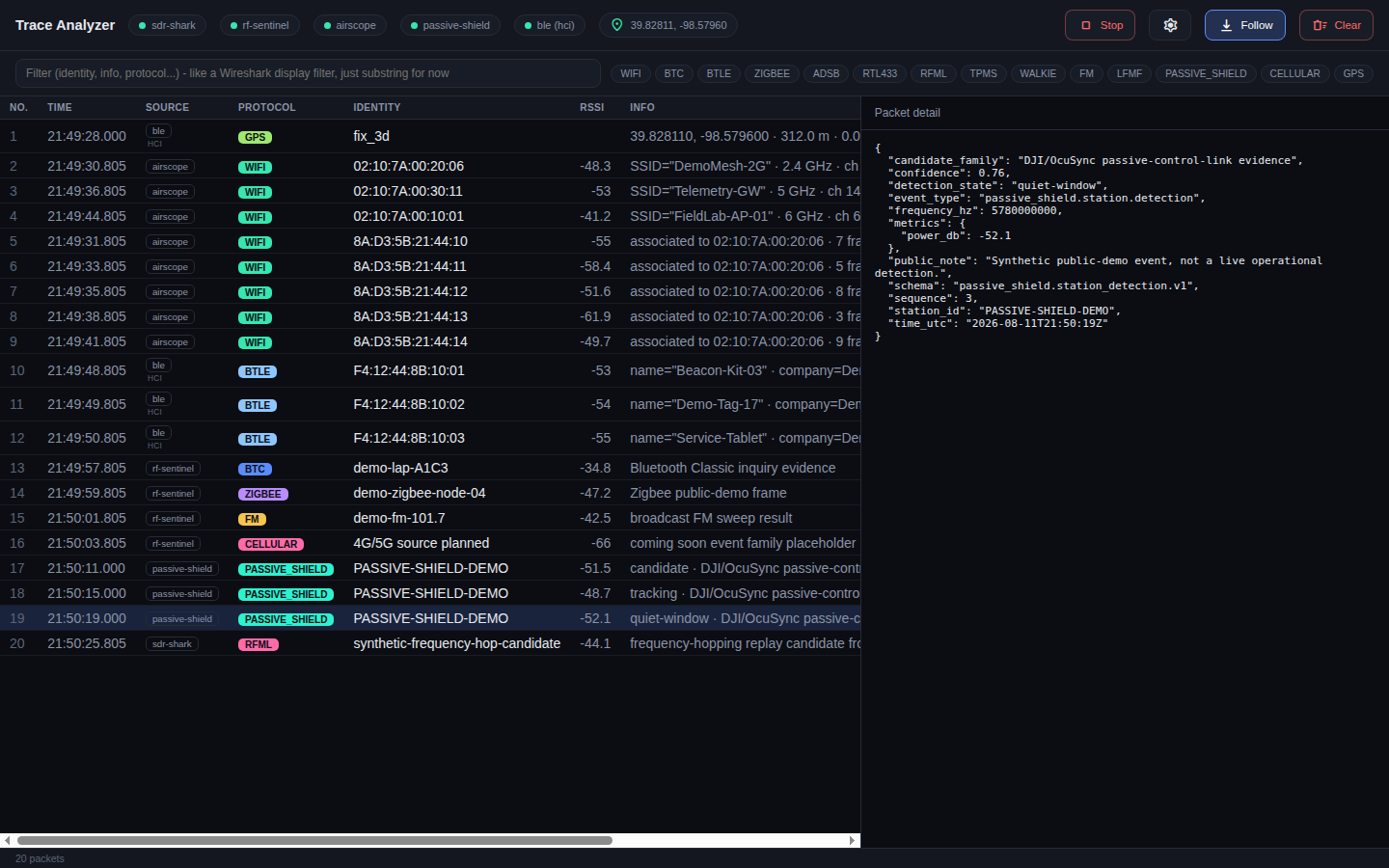
Trace Analyzer public-safe unified event timeline showing BLE GPS WiFi RF Sentinel SDR-Shark and PASSIVE-SHIELD events

Defense R&D roadmap

Public-safe demos can expose the next layer of mission-system work.

Beyond the current PASSIVE-SHIELD and RTG Spectrum proof artifacts, RTG is developing SBIR-aligned demonstration paths around sensor fusion, mission debrief and replanning, modular event-bus integration, SWaP-optimized edge AI, counter-swarm analytics, and geospatial RF evidence. Those capabilities can be shown with sanitized scenarios, replay data, result cards, and clear claim boundaries before any customer-specific deployment work.

Proof of work

AirScope shows the same foundation in field evidence and reporting.

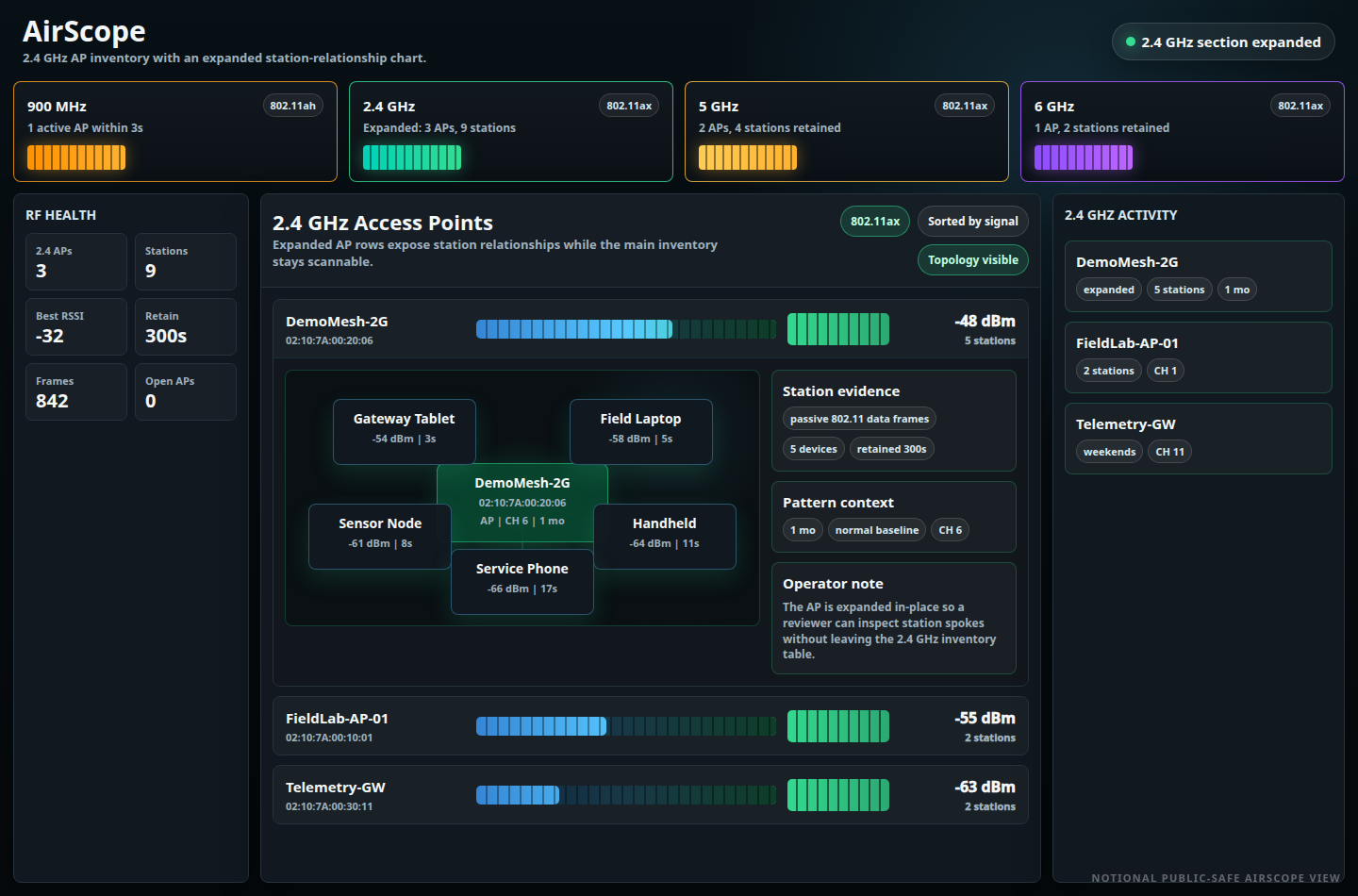
AirScope is a multi-band wireless assurance effort that combines embedded collection, normalized RF evidence, dashboard UX, Pattern-of-Life review, exports, and automated reports. Public screenshots use demo AP names and masked identifiers.

Sanitized AirScope 2.4 GHz AP row showing connected station topology